
Date: September 8, 2025
Author: Indian Head Soil & Compost Team
Category: Biosolids 101, Environmental Stewardship, Sustainable Innovation
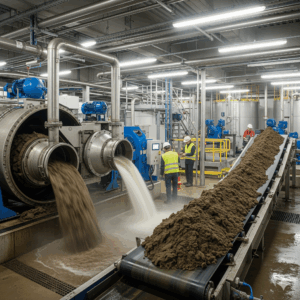
If you’ve ever wondered what happens to the solids removed during wastewater treatment—and how those materials can be safely and beneficially recycled—this guide is for you. In the United States, the U.S. Environmental Protection Agency (EPA) uses the term biosolids to describe treated sewage sludge that meets regulatory requirements and is suitable for land application as a soil conditioner or fertilizer. Biosolids are a nutrient‑rich, organic resource generated as communities clean water every day. [1](https://www.epa.gov/biosolids)
This blog explains what biosolids are, how they are produced, the major federal classifications (Class A and Class B) under EPA’s 40 CFR Part 503 standards, and where and how they are used. We’ll also cover Florida’s state rules, common treatment methods, pollutant limits, and important considerations like pathogen reduction, vector attraction reduction, and emerging contaminants. [2](https://www.ecfr.gov/current/title-40/chapter-I/subchapter-O/part-503)[3](https://www.ecfr.gov/current/title-40/chapter-I/subchapter-O/part-503/subpart-D)
“The Part 503 rule provides comprehensive requirements for the management of biosolids generated during the treatment of municipal wastewater.” — U.S. EPA, Plain English Guide to the EPA Part 503 Biosolids Rule

What Exactly Are Biosolids?
Biosolids are the solid, semi‑solid, or liquid materials produced during the treatment of domestic sewage. After treatment, these materials can be beneficially reused to improve soil properties and supply essential plant nutrients such as nitrogen and phosphorus. EPA notes that biosolids are carefully treated and monitored, and their use is regulated to protect public health and the environment. [1](https://www.epa.gov/biosolids)[4](https://www.epa.gov/agriculture/agriculture-nutrient-management-and-fertilizer)
Recycling biosolids through land application improves soil structure, water‑holding capacity, and root growth conditions, which can enhance drought tolerance and plant productivity. [5](https://www.epa.gov/biosolids/land-application-biosolids)
From Wastewater to Biosolids: How They’re Produced
At a wastewater treatment plant, incoming sewage is separated into liquids and solids. The solids undergo processes such as thickening, digestion (aerobic or anaerobic), dewatering, and sometimes advanced stabilization (e.g., composting, heat drying). These steps reduce pathogens and odors, stabilize organic matter, and prepare the material for beneficial use or disposal, in accordance with federal standards. [2](https://www.ecfr.gov/current/title-40/chapter-I/subchapter-O/part-503)[3](https://www.ecfr.gov/current/title-40/chapter-I/subchapter-O/part-503/subpart-D)
Common forms of biosolids include:
- Liquid biosolids/slurry: typically injected or incorporated into soil to limit odors and vectors. [3](https://www.ecfr.gov/current/title-40/chapter-I/subchapter-O/part-503/subpart-D)
- Dewatered “cake” (15–30% solids) produced after mechanical dewatering; often used for land application or composting. [6](https://www.biosolids.com.au/info/what-are-the-different-forms-of-biosolids/)
- Heat‑dried pellets (≈90–95% solids) for distribution and marketing as fertilizer or soil amendment. [6](https://www.biosolids.com.au/info/what-are-the-different-forms-of-biosolids/)
- Composted biosolids, created by controlled aerobic decomposition to stabilize organics, reduce pathogens, and produce a soil amendment. [7](https://www.epa.gov/biosolids/composting-biosolids)
Regulatory Foundation: EPA’s 40 CFR Part 503
The federal standards for the use or disposal of sewage sludge are found in EPA’s 40 CFR Part 503. These rules establish pollutant limits, management practices, operational standards—including pathogen reduction and vector attraction reduction—as well as monitoring, recordkeeping, and reporting for land application, surface disposal, and incineration. [2](https://www.ecfr.gov/current/title-40/chapter-I/subchapter-O/part-503)
EPA’s Plain English Guide and technical resources offer practical explanations of Part 503 requirements for land appliers and preparers, including pathogen and vector attraction reduction options. [8](https://www.epa.gov/biosolids/plain-english-guide-epa-part-503-biosolids-rule)[9](https://www.epa.gov/biosolids/pathogens-and-vector-attraction-sewage-sludge)
Classifications: Class A vs. Class B (and “Exceptional Quality”)
Class A Biosolids
Class A biosolids have undergone treatment to reduce pathogens to below detectable levels as defined in Part 503. When Class A biosolids also meet stringent pollutant concentrations (Table 3 in §503.13) and vector attraction reduction requirements, the product can be distributed and marketed with minimal site restrictions—often referred to as “Exceptional Quality (EQ).” [3](https://www.ecfr.gov/current/title-40/chapter-I/subchapter-O/part-503/subpart-D)[10](https://www.ecfr.gov/current/title-40/chapter-I/subchapter-O/part-503/subpart-B/section-503.13)[11](https://www.virginiabiosolids.com/epa-clarifies-eq-class-land-application-requirements/)
Class B Biosolids
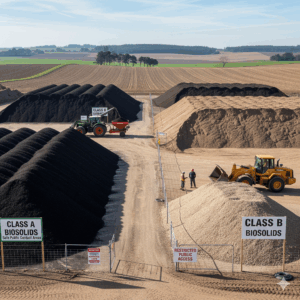
Class B biosolids have significantly reduced pathogen levels but may still contain detectable organisms. Their use is limited to non‑public contact sites and requires site restrictions (e.g., waiting periods before harvest or grazing) to allow additional pathogen die‑off and minimize exposure. [3](https://www.ecfr.gov/current/title-40/chapter-I/subchapter-O/part-503/subpart-D)
Exceptional Quality (EQ)
“EQ” is not a separate pathogen class but a marketing/quality designation within Part 503 for Class A biosolids that also meet the most stringent pollutant limits (Table 3) and vector attraction reduction. EQ products distributed in bags or containers are typically exempt from certain land application requirements because they meet the highest treatment and pollutant criteria. [10](https://www.ecfr.gov/current/title-40/chapter-I/subchapter-O/part-503/subpart-B/section-503.13)[11](https://www.virginiabiosolids.com/epa-clarifies-eq-class-land-application-requirements/)
“Class A EQ biosolids meet the most stringent pollutant, pathogen, and vector attraction reduction requirements under EPA’s regulations.” — EPA clarification memo (2020)
Key Compliance Elements Under Part 503
1) Pathogen Reduction
Part 503 Subpart D describes the criteria for Class A and Class B with respect to pathogens, including process‑based and monitoring‑based alternatives (e.g., composting time/temperature profiles, heat drying/pasteurization, or fecal coliform/Salmonella limits). [3](https://www.ecfr.gov/current/title-40/chapter-I/subchapter-O/part-503/subpart-D)[9](https://www.epa.gov/biosolids/pathogens-and-vector-attraction-sewage-sludge)
2) Vector Attraction Reduction (VAR)
To reduce the potential for animals and insects to spread pathogens, the rule provides multiple VAR options: e.g., achieving a percent volatile solids reduction through digestion, meeting a specific oxygen uptake rate (SOUR), lime stabilization to high pH, or incorporating/injecting biosolids into soil within specified timeframes. [12](https://www.law.cornell.edu/cfr/text/40/503.33)[9](https://www.epa.gov/biosolids/pathogens-and-vector-attraction-sewage-sludge)
3) Pollutant Limits
Part 503 includes ceiling concentrations, cumulative pollutant loading rates, monthly average concentrations, and annual pollutant loading rates for trace elements such as arsenic, cadmium, copper, lead, mercury, molybdenum, nickel, selenium, and zinc (Tables 1–4 of §503.13). These limits ensure land application does not cause harmful buildup of metals in soils. [10](https://www.ecfr.gov/current/title-40/chapter-I/subchapter-O/part-503/subpart-B/section-503.13)
EPA’s consolidated summary of pollutant limits presents the same tables and values in a user‑friendly format. [13](https://www.epa.gov/biosolids/regulatory-determinations-pollutants-biosolids)
How Are Biosolids Used?
When properly managed, biosolids can be a cost‑effective soil amendment and fertilizer, providing organic matter and essential nutrients. Common applications include: [5](https://www.epa.gov/biosolids/land-application-biosolids)[4](https://www.epa.gov/agriculture/agriculture-nutrient-management-and-fertilizer)
- Agriculture: Land application to cropland based on agronomic rates helps meet crop nitrogen and phosphorus needs while improving soil tilth. [5](https://www.epa.gov/biosolids/land-application-biosolids)
- Forestry: Enhances tree growth and soil productivity, especially in nutrient‑poor sites. [5](https://www.epa.gov/biosolids/land-application-biosolids)
- Land Reclamation: Restores construction sites, mines, and degraded lands by rebuilding topsoil and supporting vegetation establishment. [5](https://www.epa.gov/biosolids/land-application-biosolids)
- Urban Green Spaces & Landscaping: Class A (often EQ) or composted biosolids are used in parks, athletic fields, and soil blends to improve structure and water retention. [3](https://www.ecfr.gov/current/title-40/chapter-I/subchapter-O/part-503/subpart-D)[10](https://www.ecfr.gov/current/title-40/chapter-I/subchapter-O/part-503/subpart-B/section-503.13)
Application Methods & Best Practices
Application techniques vary by product form and site conditions:
- Surface spreading with incorporation or subsurface injection limits odors and reduces vector attraction and runoff risk, particularly for liquid or cake biosolids. [3](https://www.ecfr.gov/current/title-40/chapter-I/subchapter-O/part-503/subpart-D)
- Pelletized or composted biosolids are typically broadcast or blended into soil and can be used in distribution and marketing programs when they meet Class A/EQ criteria. [10](https://www.ecfr.gov/current/title-40/chapter-I/subchapter-O/part-503/subpart-B/section-503.13)
EPA emphasizes that land application should follow agronomic rates, setbacks, slope restrictions, and timing to protect water quality and public health. [5](https://www.epa.gov/biosolids/land-application-biosolids)
Florida’s Biosolids Rules (Chapter 62‑640, F.A.C.)
In Florida, biosolids management is governed by Chapter 62‑640, Florida Administrative Code, with significant rule updates effective June 21, 2021. The revisions, guided by a Technical Advisory Committee and state legislation, were designed to minimize nutrient migration—especially phosphorus—to protect waterbodies. [14](https://floridadep.gov/water/domestic-wastewater/content/dep-chapter-62-640-fac-rulemaking)
Among other requirements, land application sites must be permitted and operate under a Nutrient Management Plan (NMP). Biosolids applied to agricultural sites must follow NMP rates, and Class A/AA or Class B designations are recognized consistent with pathogen and pollutant standards. Florida also adopts ceiling and monthly average pollutant limits aligned with federal Table 1 and Table 3 values in §503.13. [15](http://flrules.elaws.us/fac/62-640.700/)
The Florida Department of Environmental Protection (FDEP) provides overview materials summarizing pollutant limits, treatment to control microorganisms, and management practices for application sites. [16](https://floridadep.gov/water/domestic-wastewater/content/domestic-wastewater-biosolids)
Benefits & Tradeoffs
EPA describes multiple benefits from responsible biosolids recycling: returning nutrients to soils, improving water‑holding capacity and soil structure, and supporting sustainable agriculture. At the same time, over‑application of nutrients (from any source) can contribute to nutrient pollution, so adherence to agronomic rates and NMPs is essential. [4](https://www.epa.gov/agriculture/agriculture-nutrient-management-and-fertilizer)[5](https://www.epa.gov/biosolids/land-application-biosolids)
Part 503’s pollutant limits and operational standards, together with state rules and site management, form a layered protection system for land application programs. [2](https://www.ecfr.gov/current/title-40/chapter-I/subchapter-O/part-503)
Emerging Considerations: PFAS and Other Contaminants
EPA notes that sewage sludge may contain per‑ and polyfluoroalkyl substances (PFAS) introduced from households, commercial facilities, and industrial dischargers. Research and risk assessments are ongoing. In January 2025, EPA released a draft risk assessment evaluating potential human health risks associated with PFOA and PFOS in biosolids across use and disposal scenarios; once finalized, this science can inform future regulatory actions. [1](https://www.epa.gov/biosolids)[17](https://www.epa.gov/newsreleases/epa-releases-draft-risk-assessment-advance-scientific-understanding-pfoa-and-pfos)
The draft assessment modeled conservative exposure scenarios (e.g., farm families relying on on‑site wells and foods produced on land where biosolids were applied) and found that risk thresholds could be exceeded under some modeled conditions, highlighting the importance of source control and ongoing research. Industry analyses emphasize the conservative nature of assumptions used and the need for site‑specific evaluation. [17](https://www.epa.gov/newsreleases/epa-releases-draft-risk-assessment-advance-scientific-understanding-pfoa-and-pfos)[18](https://www.woodardcurran.com/wp-content/uploads/2025/02/Understanding-EPA-Risk-Assessment-Biosolids-PFAS-WhitePaper_2025.pdf)
“Biosolids are an important resource that can and should be safely used… The Part 503 rule creates incentives for beneficial use.” — U.S. EPA, Plain English Guide
Composting & the USCC STA Program
Composting is a controlled aerobic process that stabilizes wastewater solids, destroys pathogens, minimizes odors, and reduces vector attraction—producing a soil amendment that can meet Class A standards when time/temperature and process controls are achieved. [7](https://www.epa.gov/biosolids/composting-biosolids)
The U.S. Composting Council’s Seal of Testing Assurance (STA) program supports product transparency by requiring routine testing (e.g., nutrients, organic matter, stability/maturity), standardized methods (TMECC), and disclosure via a Compost Technical Data Sheet (CTDS). STA also includes pass/fail metrics aligned to EPA Class A pathogen and §503.13 pollutant criteria. [19](https://www.compostingcouncil.org/page/SealofTestingAssuranceSTA)[20](http://www.mncompostingcouncil.org/uploads/1/5/6/0/15602762/mncotoc_sta_program_gowri_slides_1.pptx)
At IndianheadProducts.farm, our compost carries the designation Clean STA Certified Soil Amendment Compost and Clean STA Certified Compost, reflecting our commitment to rigorous testing, quality, and transparency under STA program requirements. (Note: STA certification does not assert a product is “PFAS‑free”; it verifies testing and disclosure across defined parameters.) [19](https://www.compostingcouncil.org/page/SealofTestingAssuranceSTA)[20](http://www.mncompostingcouncil.org/uploads/1/5/6/0/15602762/mncotoc_sta_program_gowri_slides_1.pptx)
Safety in Practice: Site Restrictions & Worker Protections
For Class B applications, Subpart D of Part 503 specifies site restrictions (e.g., waiting periods before harvesting crops or allowing livestock to graze) to allow natural pathogen die‑off and reduce exposure risk. Worker hygiene, PPE, and adherence to application setbacks and incorporation schedules are essential elements of safe operations. [3](https://www.ecfr.gov/current/title-40/chapter-I/subchapter-O/part-503/subpart-D)
For Class A/EQ materials that meet pathogen, pollutant, and vector attraction standards, fewer or no site restrictions apply, enabling use in public contact areas and distribution and marketing programs. [10](https://www.ecfr.gov/current/title-40/chapter-I/subchapter-O/part-503/subpart-B/section-503.13)[11](https://www.virginiabiosolids.com/epa-clarifies-eq-class-land-application-requirements/)
Other Management Pathways
While beneficial use is a primary pathway, Part 503 also governs surface disposal and incineration, with pollutant concentration limits and operational standards tailored to those practices. Facilities select management approaches based on local needs, infrastructure, economics, and environmental goals. [2](https://www.ecfr.gov/current/title-40/chapter-I/subchapter-O/part-503)
Frequently Asked Questions
Do biosolids replace commercial fertilizer?
Biosolids supply nitrogen, phosphorus, organic matter, and micronutrients, but nutrient release patterns differ from synthetic products. Agronomic rate calculations, soil testing, and nutrient management plans are essential to match crop needs and protect water quality. [4](https://www.epa.gov/agriculture/agriculture-nutrient-management-and-fertilizer)
What is the difference between Class A, Class AA (Florida), and EQ?
“Class A” is the pathogen standard. In Florida, “Class AA” refers to Class A biosolids that also meet monthly average pollutant concentrations (aligned with §503.13 Table 3) and vector attraction reduction; these products can be distributed and marketed. “EQ” is the federal terminology commonly used for Class A biosolids that meet Table 3 metals and VAR—similarly allowing distribution and marketing. [15](http://flrules.elaws.us/fac/62-640.700/)[10](https://www.ecfr.gov/current/title-40/chapter-I/subchapter-O/part-503/subpart-B/section-503.13)
How are odors controlled?
Odors are minimized by stabilization processes (digestion, composting, heat drying) and by application methods such as incorporation and injection. Time‑and‑temperature controlled composting further reduces odor potential. [7](https://www.epa.gov/biosolids/composting-biosolids)[3](https://www.ecfr.gov/current/title-40/chapter-I/subchapter-O/part-503/subpart-D)
What about metals and other pollutants?
Part 503 sets binding limits for specific trace elements (e.g., arsenic, cadmium, copper, lead, mercury, nickel, selenium, zinc). Land application cannot exceed ceiling concentrations or cumulative loading limits, and EQ/Class AA products must meet the most stringent monthly average concentrations. [10](https://www.ecfr.gov/current/title-40/chapter-I/subchapter-O/part-503/subpart-B/section-503.13)[15](http://flrules.elaws.us/fac/62-640.700/)
Are biosolids safe to use?
Safety depends on meeting regulatory standards, proper treatment, and good management practices. Federal and state rules require monitoring, recordkeeping, and site controls. As science evolves on emerging contaminants (e.g., PFAS), EPA is evaluating risks to determine whether additional actions are warranted. [2](https://www.ecfr.gov/current/title-40/chapter-I/subchapter-O/part-503)[17](https://www.epa.gov/newsreleases/epa-releases-draft-risk-assessment-advance-scientific-understanding-pfoa-and-pfos)
Indianhead’s Role: Turning Waste Into a Resource
Indianhead Composting Technologies partners with municipalities and private clients to process biosolids through advanced composting. Our products—Clean STA Certified Soil Amendment Compost and Clean STA Certified Compost—are designed to improve soil health, reduce nutrient runoff, and support resilient landscapes across Florida. STA participation demonstrates our commitment to transparent testing, consistent quality, and end‑use guidance. [19](https://www.compostingcouncil.org/page/SealofTestingAssuranceSTA)
By transforming biosolids into high‑value compost, communities can divert material from landfills, enhance soils, and support local economies—while aligning with Florida’s goal of reducing nutrient migration to sensitive waterbodies. [14](https://floridadep.gov/water/domestic-wastewater/content/dep-chapter-62-640-fac-rulemaking)
“The environment is where we all meet; it is the one thing all of us share.” — Lady Bird Johnson
Takeaways
- Biosolids are treated sewage sludge suitable for beneficial use under EPA’s Part 503 standards. [1](https://www.epa.gov/biosolids)
- Class A (often EQ/Class AA in practice) meets the most stringent pathogen and pollutant criteria and is suitable for public contact uses and distribution/marketing. Class B has significant but incomplete pathogen reduction and comes with site restrictions to protect public health. [3](https://www.ecfr.gov/current/title-40/chapter-I/subchapter-O/part-503/subpart-D)[10](https://www.ecfr.gov/current/title-40/chapter-I/subchapter-O/part-503/subpart-B/section-503.13)[15](http://flrules.elaws.us/fac/62-640.700/)
- Compliance involves pathogen reduction, vector attraction reduction, and pollutant limits, plus monitoring and recordkeeping. [2](https://www.ecfr.gov/current/title-40/chapter-I/subchapter-O/part-503)
- Biosolids deliver soil health and nutrient benefits but must be applied at agronomic rates under nutrient management plans to protect water quality. [5](https://www.epa.gov/biosolids/land-application-biosolids)[4](https://www.epa.gov/agriculture/agriculture-nutrient-management-and-fertilizer)
- EPA is actively researching PFAS in biosolids; a draft risk assessment (2025) will inform potential future actions as science evolves. [17](https://www.epa.gov/newsreleases/epa-releases-draft-risk-assessment-advance-scientific-understanding-pfoa-and-pfos)
Call to Action
Curious how Class A compost can elevate your soil program while supporting Florida’s environmental goals? Explore our Clean STA Certified Soil Amendment Compost and Clean STA Certified Compost, request a Compost Technical Data Sheet (CTDS), or schedule a plant tour to see our process in action.
Visit https://www.indianheadproducts.farm to learn more and connect with our team.
